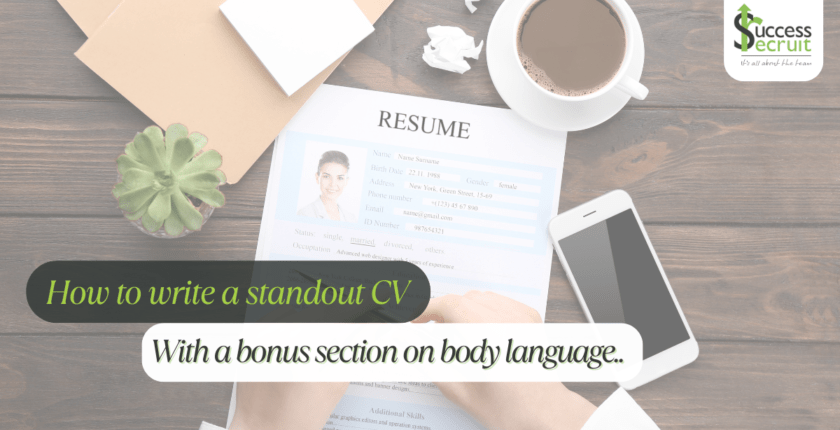
Write a Standout CV & Personal Statement
With a bonus section on mastering your body language because first impressions really do count!
Did you know? The average employer spends just seconds scanning a CV. That’s less time than it takes to make a cup of tea!
With so many applications flooding in, recruiters and hiring managers make snap decisions about who moves forward—so your CV needs to grab attention fast.
At Success Recruit, we believe your CV is your personal brand—it should sell your skills, highlight your strengths, and show why you’re the perfect match for your dream role.
Let’s make sure your CV stands out for the right reasons.
What to Include – The essentials
1. Personal Statement – Your headline
Your personal statement sits at the top of your CV and is the first thing an employer will read. This is your opportunity to capture their attention immediately. Keep it short, sharp, and impactful – 3–4 lines max.
What to Include:
- Who you are (“A highly motivated marketing graduate”)
- Your career goals (aligned to the role you’re applying for)
- What you offer (key skills, expertise, and industry knowledge)
⏳ Top tip:Don’t rush this! Your personal statement should be tailored for every job application. If you need help crafting one, keep reading!
2. Contact Information – The basics
Your CV can be the strongest document in the pile, but if an employer can’t reach you, it’s pointless. Your contact details must be up-to-date and easy to find. This section is straightforward but essential—don’t overlook it!
✅ Must include:
- Full Name
- Contact Number
- Professional Email Address
- Home Location (City/Town is fine)
- LinkedIn Profile
⚠️ Common mistake:Outdated details! Check and update this section regularly—you’d be surprised how many people miss opportunities because of an old phone number.
3. Work Experience – Time to show your value
Employers want to see impact, not just a list of responsibilities. List your most recent job first (reverse chronological order) and focus on achievements rather than just tasks.
Each role should include:
- Job Title
- Company Name
- Dates of Employment
- Key Responsibilities & Achievements
📊 Standout tip: Use numbers! Instead of “Managed a team,” say “Led a team of 10 and increased productivity by 25%”. This shows tangible results.
4. Education – Keep it relevant
Your education section isn’t just about listing where you studied—it’s about showing your academic achievements in a way that supports your career goals. Whether you have a degree, vocational training, or certifications, structure this section for clarity and impact.
- Degree (if applicable)
- Institution Name & Location
- Graduation Date
- Key Qualifications (A Levels, GCSEs)
🎯 Rule of thumb:If space is tight, only list qualifications that support your career goals (e.g., Maths & English for finance roles).
5. Skills – Highlight your strengths
Your skills section is your chance to showcase the expertise and abilities that set you apart. Employers often scan this section quickly to match your skills with their job requirements, so make it easy for them to see why you’re the right fit!
💻 Hard Skills (technical skills)
- Software expertise (Excel, Photoshop, CRM tools)
- Industry certifications
- Bilingual abilities
🤝 Soft Skills (transferable skills)
- Leadership
- Communication
- Problem-solving
🔎 Use keywords from the job description to make sure your CV passes Applicant Tracking Systems (ATS).
6. Hobbies & Interests – add your personality
Employers hire people, not just CVs. Share relevant hobbies that showcase your transferable skills.
🏆 Example:
- Sports= Teamwork & discipline
- Volunteering= Leadership & empathy
- Creative hobbies= Innovation & problem-solving
🎤 Interview prep tip:If you list a hobby, be ready to discuss it—employers often ask!
Bonus Section: The secret to confident body language in interviews
Your CV gets you through the door, but your body language seals the deal in an interview. We have included a bonus section just for you! Here are the key principles you should master before interviewing.
1. Eye contact – builds trust instantly
- If interviewing on video, look at the camera, not the screen
- Don’t stare—follow a 70/30 rule (70% eye contact, 30% natural breaks)
- Make eye contact when introducing yourself and throughout the conversation
2. Remove barriers – open up your body language
- Lean slightly forward to show engagement
- Keep hands visible (rest them naturally on the table)
- Avoid crossing your arms (this signals defensiveness)
3. Active engagement – show you’re interested
- Nod slightly when listening (but don’t overdo it!)
- Mirro rthe interviewer’s energy subtly (it builds rapport)
- Use hand gestures when explaining ideas—it makes you look confident
Review your CV today, go ahead and remove unnecessary details and highlight your achievements. Then, practice confident body language on a family member or friend. Small changes can make all the difference for your job search success. Good luck!
🌟 Get a power-hour with our career expert*
We’ll spend an hour getting to know you, your career goals, and your unique strengths. By the end, you’ll have a CV that truly stands out and represents you.
🔗 Need help perfecting your CV? Get in touch with Success Recruit today!
*fees apply